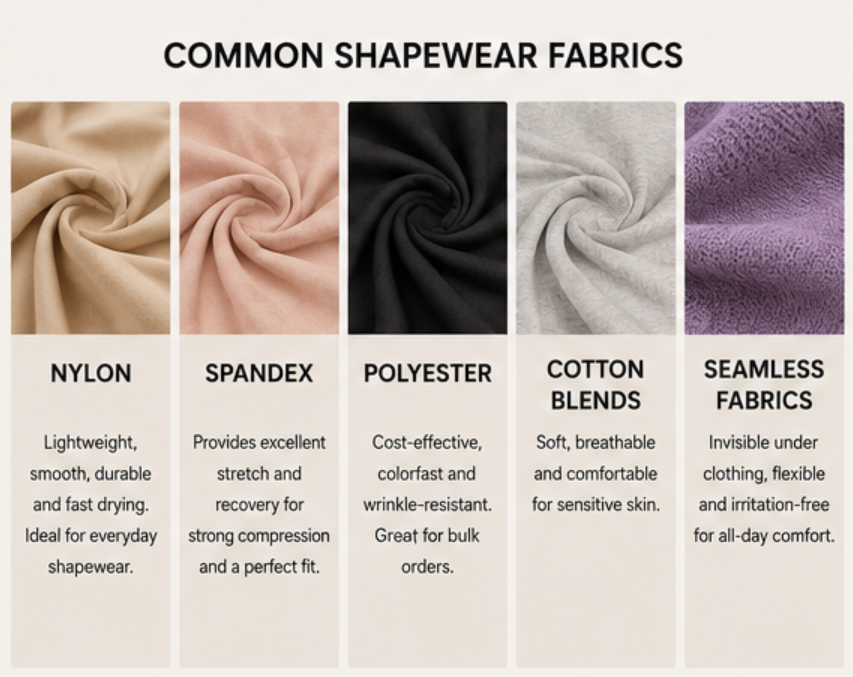
Nylon is the most commonly used material in premium shapewear.
Advantages include:
Because of its silky appearance, nylon creates a premium look that appeals to both online shoppers and retail customers.
Best suited for:
Spandex provides the compression power behind shapewear.
Its unique characteristics include:
Most premium shapewear contains between 10% and 30% spandex, depending on the desired compression level.
Higher spandex content generally produces firmer shaping but should be balanced with comfort.
Polyester is often selected for cost-effective production.
Benefits include:
Many value-oriented retail brands choose polyester blends to achieve competitive pricing while maintaining acceptable performance.
Although pure cotton offers limited compression, cotton-blend shapewear provides enhanced comfort for consumers seeking everyday wear.
Advantages include:
Cotton lining is especially popular in products designed for extended daily use.
Seamless technology has become one of the fastest-growing segments in the shapewear industry.
Benefits include:
Premium retailers increasingly prefer seamless collections because they attract consumers looking for discreet shaping solutions.
Fabric selection directly affects compression performance.
Suitable for:
Offers gentle support without restricting movement.
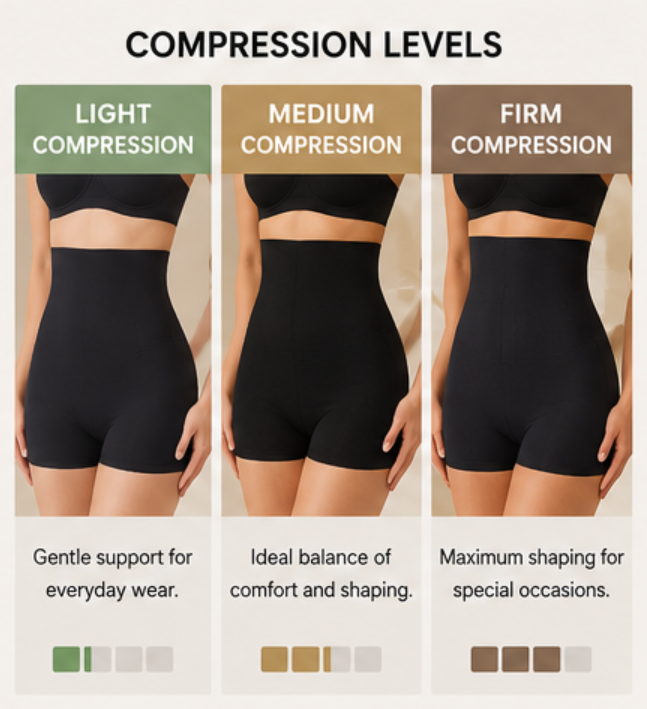
The most popular retail category.
Provides:
This level appeals to the widest range of consumers.
Designed for customers seeking maximum shaping.
Ideal for:
Firm compression garments require premium elastic fabrics to remain comfortable during extended wear.
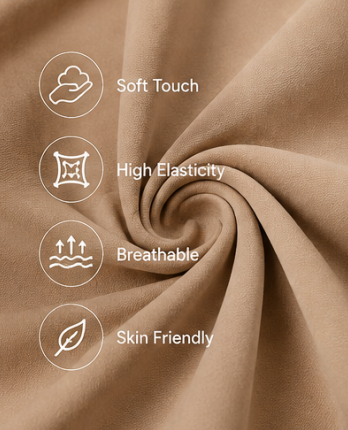
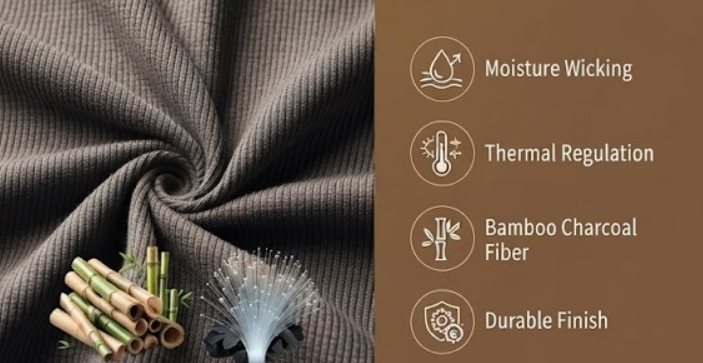
Consumers increasingly prioritize comfort alongside shaping performance.
Modern breathable fabrics offer:
For distributors serving North America, Europe, Southeast Asia, and the Middle East, breathable fabrics can become a major competitive advantage.
High-quality fabrics retain their compression even after dozens of wash cycles.
Durable shapewear typically features:
These qualities reduce product returns and increase customer confidence in the brand.
Different regions often prioritize different product features.
Consumers tend to favor:
European buyers often emphasize:
Popular features include:
Lightweight and breathable fabrics perform particularly well due to tropical climates.
Retailers frequently seek:
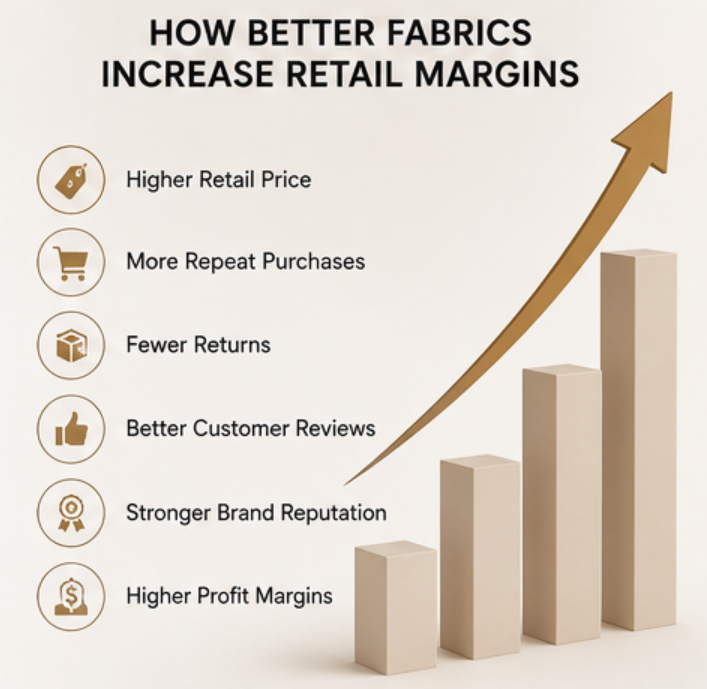
Choosing superior materials may raise manufacturing costs slightly, but it often delivers significantly higher returns.
Premium fabrics can help retailers:
Consumers are increasingly willing to pay more for shapewear that combines comfort, durability, and reliable shaping performance.
Before placing large-volume orders, buyers should confirm:
Asking these questions helps buyers compare suppliers more effectively and reduce sourcing risks.
Fabric selection is one of the most important factors influencing the success of any shapewear collection. The right combination of nylon, spandex, polyester, cotton blends, and seamless knitting technology can significantly improve comfort, shaping performance, and product durability.
For retailers, distributors, and private label brands, investing in premium materials is not simply about product quality—it is a strategy for increasing customer satisfaction, strengthening brand loyalty, reducing returns, and ultimately boosting retail margins.
Partnering with an experienced shapewear manufacturer that offers consistent quality, flexible OEM/ODM services, and strict quality control can help businesses build a competitive product portfolio for today's global market.

 EN
EN