Introduction
The United States is one of the largest import markets for apparel products, including shapewear, compression garments, and body shaping clothing. For wholesalers, distributors, and private label brands, understanding import regulations is essential to ensure smooth customs clearance, avoid shipment delays, and maintain compliance with U.S. trade laws.
Unlike some consumer markets, the U.S. has relatively structured import requirements related to textile labeling, safety standards, and customs documentation. Buyers who fail to comply may face delays, penalties, or shipment rejection.
1.Overview of Shapewear Import Requirements in the USA
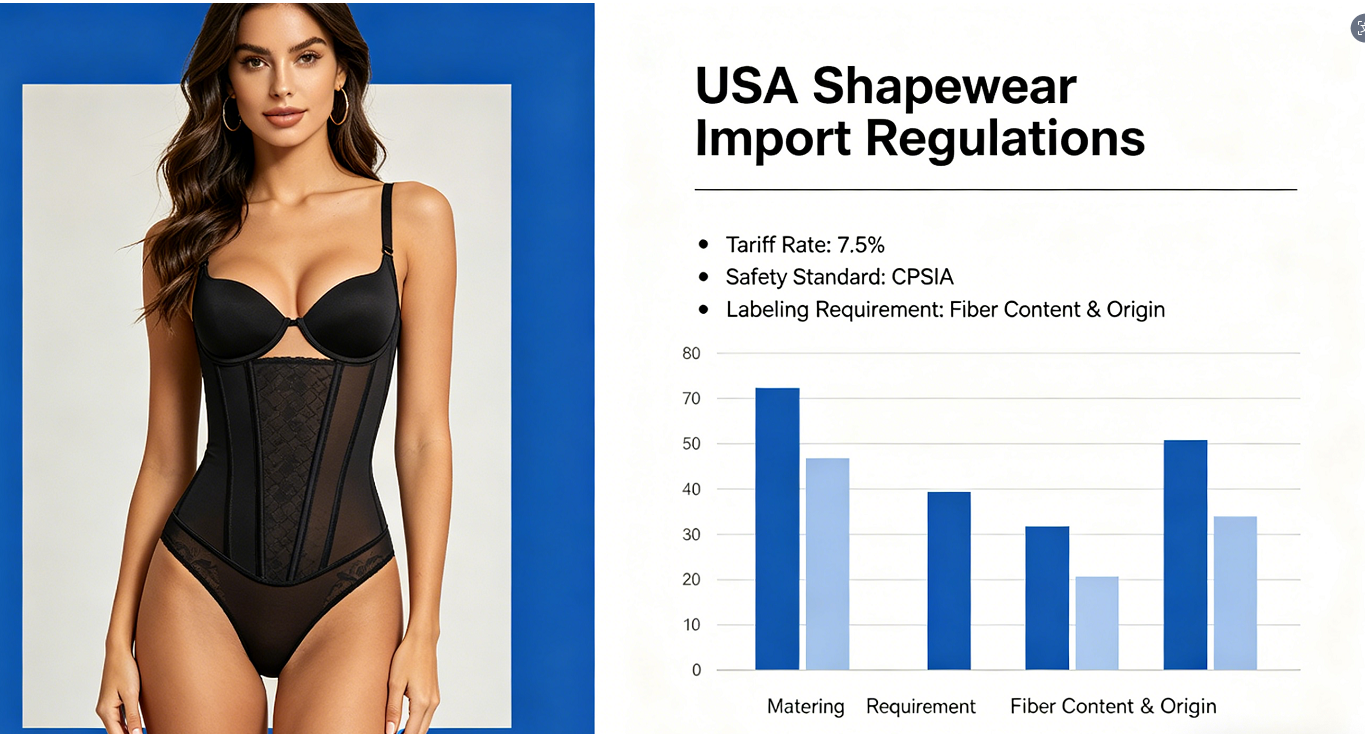
Importing shapewear into the United States requires compliance with several regulatory frameworks, mainly related to textile classification, labeling, and customs declaration.
Shapewear products are generally classified under textile and apparel categories and must meet standard import documentation requirements before entering the U.S. market.
Buyer Insight:
● Proper HS code classification is required
● Accurate product description is mandatory
● Customs declaration must match product specification
● Mislabeling can cause shipment delays
2. Textile Labeling Requirements (FTC Rules)
The Federal Trade Commission (FTC) requires all textile products sold in the U.S. to include clear and accurate labeling.
For shapewear products, this typically includes:
● Fiber content (e.g., nylon, spandex, polyester)
● Country of origin
● Manufacturer or importer identification
● Care instructions
Labels must be permanently attached or clearly visible on packaging or product tags.
Buyer Insight:
● Non-compliant labeling may result in fines or product rejection
● Private label buyers must ensure branding does not conflict with FTC rules
● Accurate fiber composition is critical for customs clearance
Labeling must be consistent with import documents
3. Customs Documentation Requirements
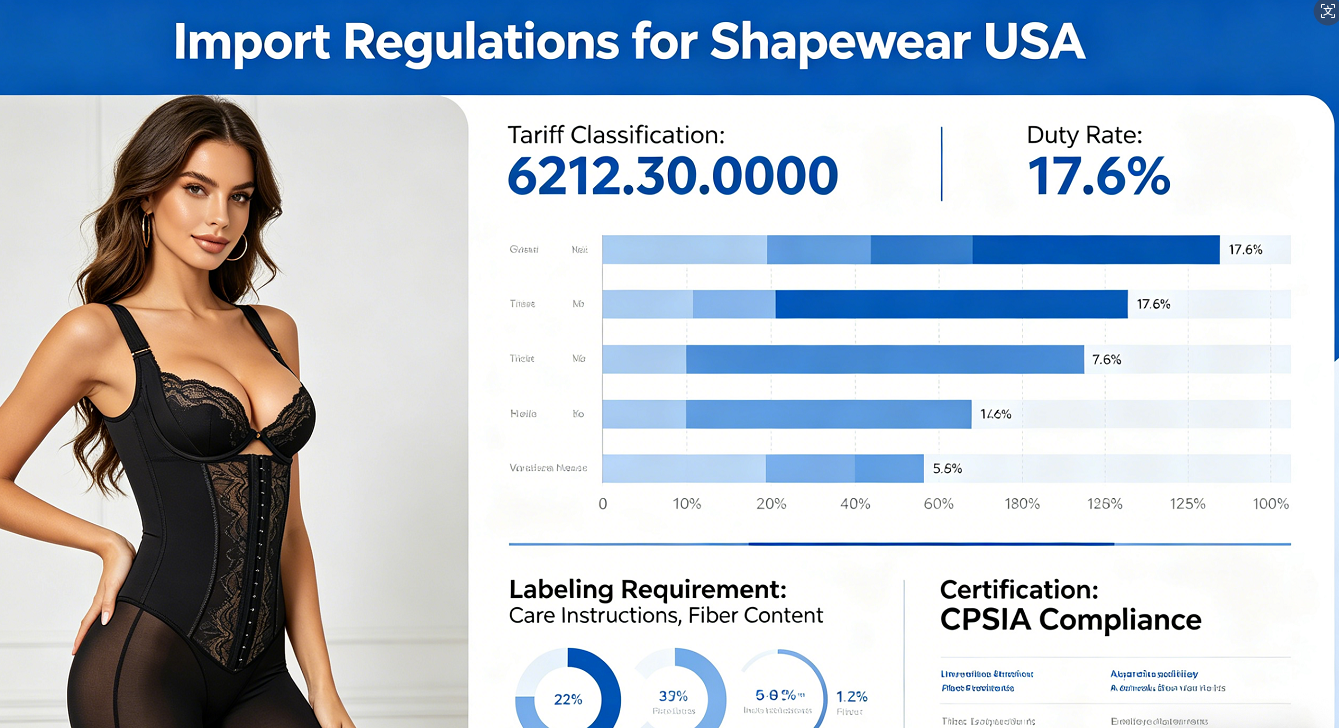
To import shapewear into the USA, importers must provide standard customs documentation through U.S. Customs and Border Protection (CBP).
Common required documents include:
● Commercial invoice
● Packing list
● Bill of lading or airway bill
● Import declaration (CBP form)
● HS code classification
For bulk shipments, additional documentation may be required depending on shipment value and port of entry.
Buyer Insight:
● Incomplete documentation can delay clearance
● Accurate HS code reduces customs risk
● Experienced freight forwarders are highly recommended
● Documentation consistency is key for smooth import
4. HS Code Classification for Shapewear
Shapewear typically falls under apparel and textile HS code categories, depending on material composition and product type.
Correct classification is important because it affects:
● Import duty rates
● Customs inspection level
● Clearance speed
Incorrect classification may lead to penalties or shipment reassessment.
Buyer Insight:
● HS codes vary based on material and garment type
● Compression garments may have specific sub-classifications
● Consistency in classification is required across shipments
● Professional customs brokers can reduce classification risk
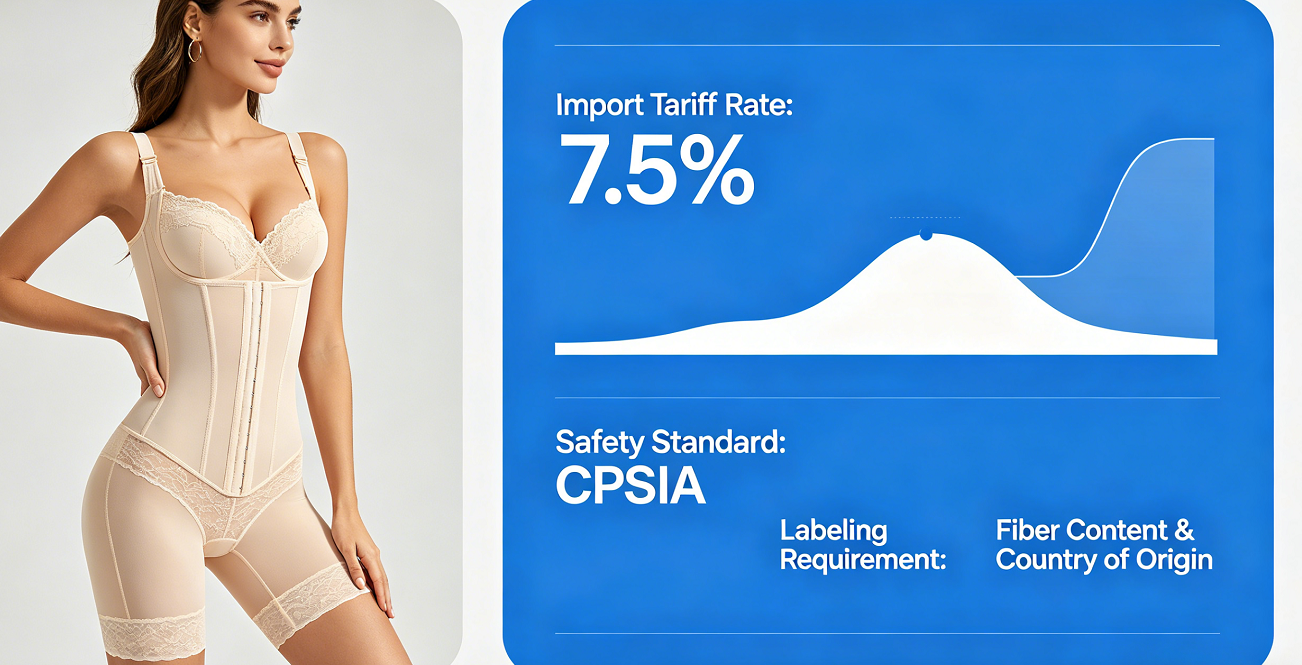
5. U.S. Import Duties and Taxes
Import duties for shapewear depend on product classification, material composition, and trade agreements.
The United States generally applies moderate tariff rates on textile products, but costs can vary depending on sourcing origin.
Importers should also consider:
● Customs duty
● Merchandise processing fee (MPF)
● Harbor maintenance fee (HMF) for ocean shipments
Buyer Insight:
● Total landed cost must include all fees
● Duty rates vary by HS classification
● Air freight vs sea freight impacts total cost structure
● Proper planning improves profit margins
 6. Product Safety and Compliance Considerations
Although shapewear is not considered a high-risk product category, it must still comply with general consumer product safety expectations in the U.S.
Key considerations include:
● Non-toxic materials
● Skin-safe fabrics
● No restricted chemicals in textile production
● Proper manufacturing standards
For large retail distribution, additional compliance documentation may be requested.
Buyer Insight:
● Safety compliance increases retail acceptance
● Large retailers may require testing reports
● Fabric certification improves buyer trust
● Compliance supports long-term brand growth
Conclusion
Importing shapewear into the United States is a well-structured but compliance-sensitive process. For wholesalers, distributors, and private label brands, understanding labeling rules, customs documentation, and classification requirements is essential for smooth market entry.
With proper supplier coordination and regulatory awareness, businesses can successfully build a stable and scalable supply chain into the U.S. market.






 EN
EN