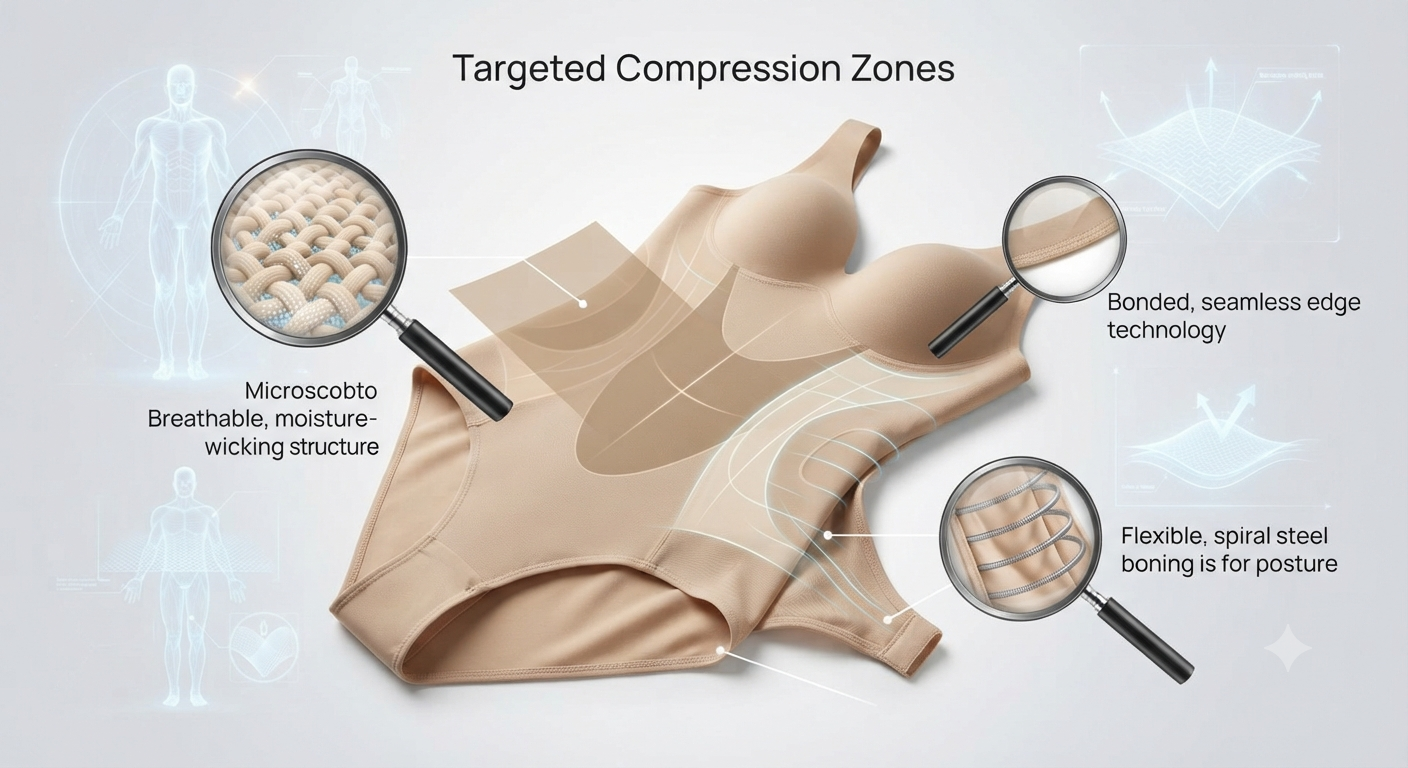
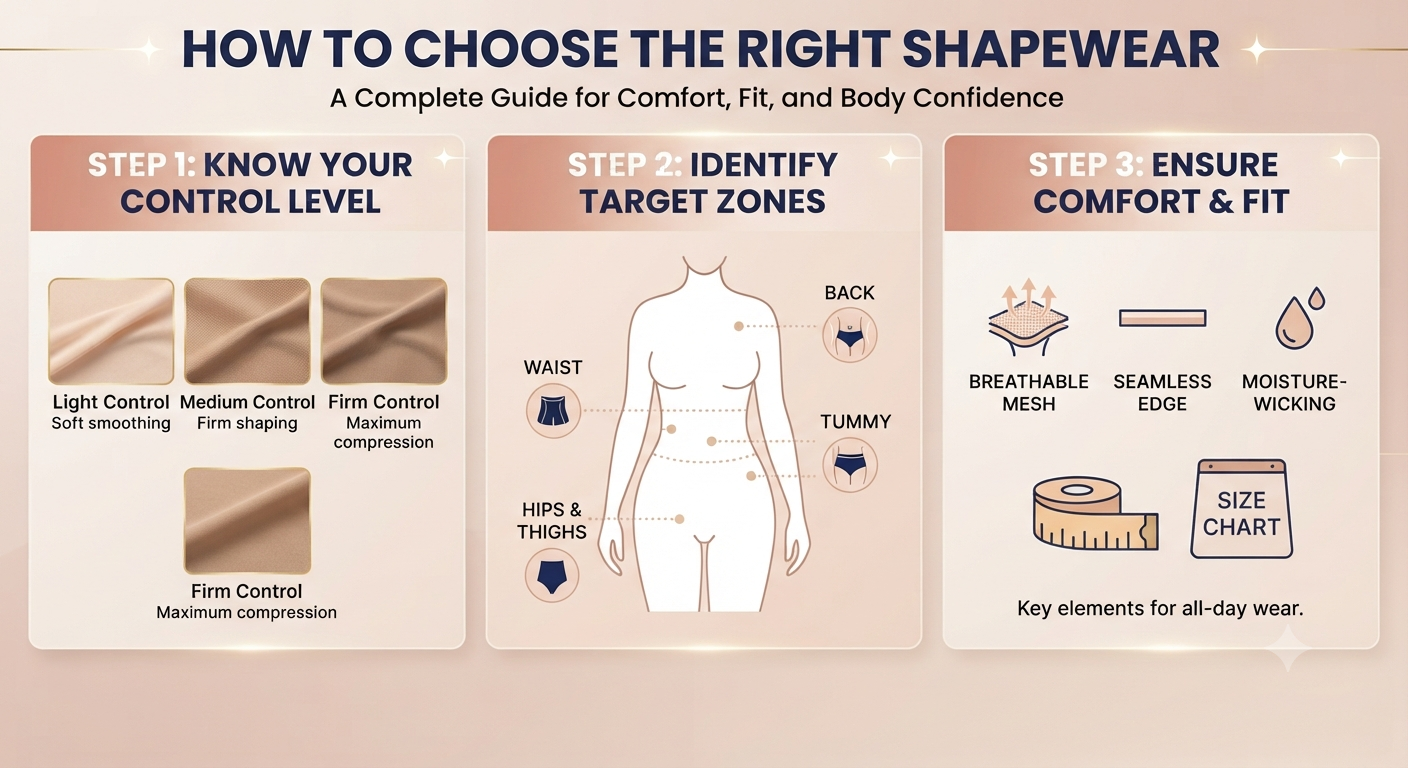
In today's global fashion market, shapewear and compression garments have become increasingly popular among consumers who want improved body confidence, enhanced comfort, and better support. Although these two product categories may look similar, they serve different purposes and are designed with different technologies.
For retailers, wholesalers, and private label brands, understanding the difference between shapewear and compression garments is essential when selecting the right products for their target markets.
Shapewear is a type of body-contouring underwear designed to smooth, shape, and enhance the natural curves of the body. It is mainly used in fashion, daily wear, and special occasions.
Modern shapewear uses advanced fabrics such as nylon, spandex, microfiber, and seamless knitting technology to provide comfortable compression while creating a smoother silhouette.
Common shapewear products include:
The main goal of shapewear is not to change the body structure but to improve appearance by creating a more balanced and streamlined figure.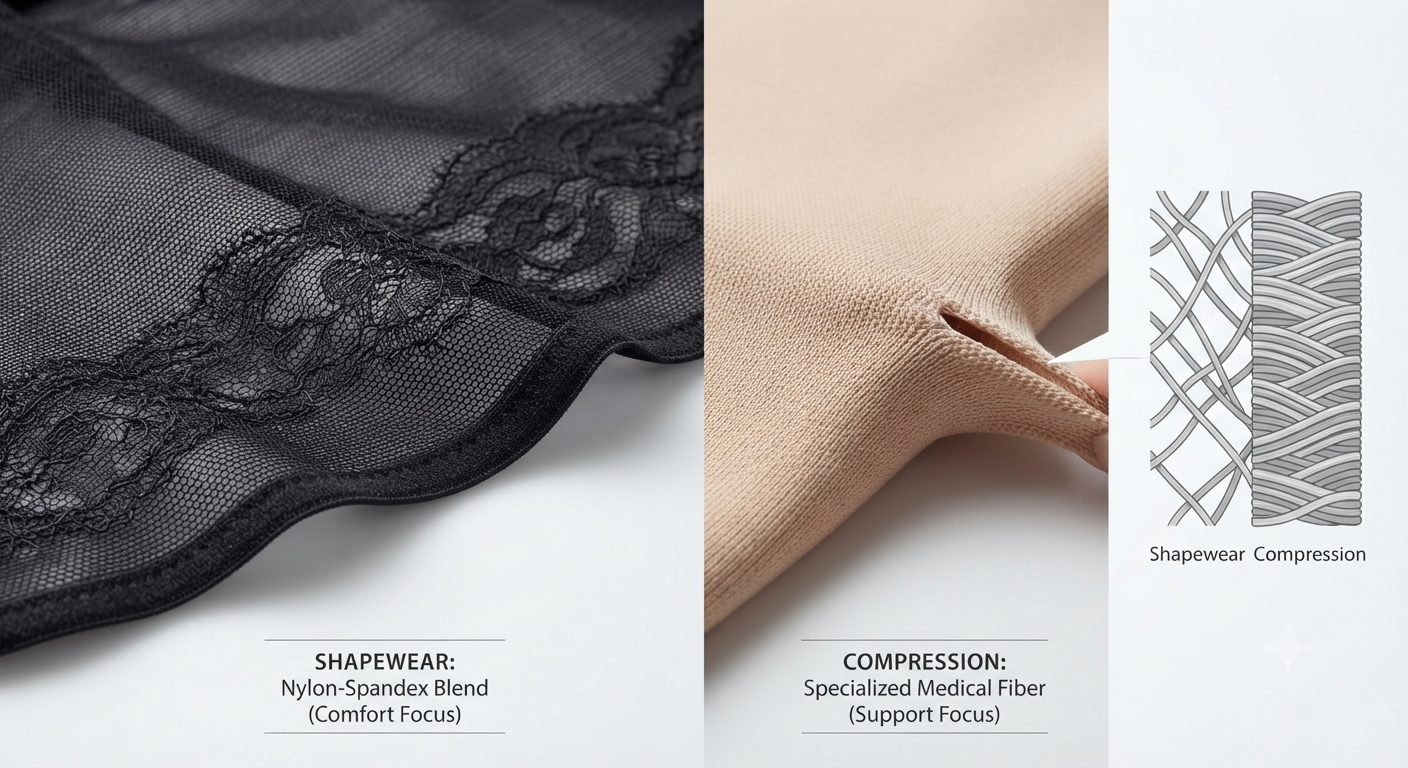
Compression garments are specially designed clothing products that apply controlled pressure to specific areas of the body. They are commonly used in sports, recovery, medical support, and fitness applications.
Compression clothing is engineered with stronger compression levels and technical fabrics to support muscles, improve circulation, and reduce muscle vibration during physical activities.
Common compression garments include:
Unlike shapewear, compression garments focus more on performance, support, and functional benefits.
The biggest difference is the intended function.
Shapewear focuses on appearance enhancement:
Compression garments focus on body support:
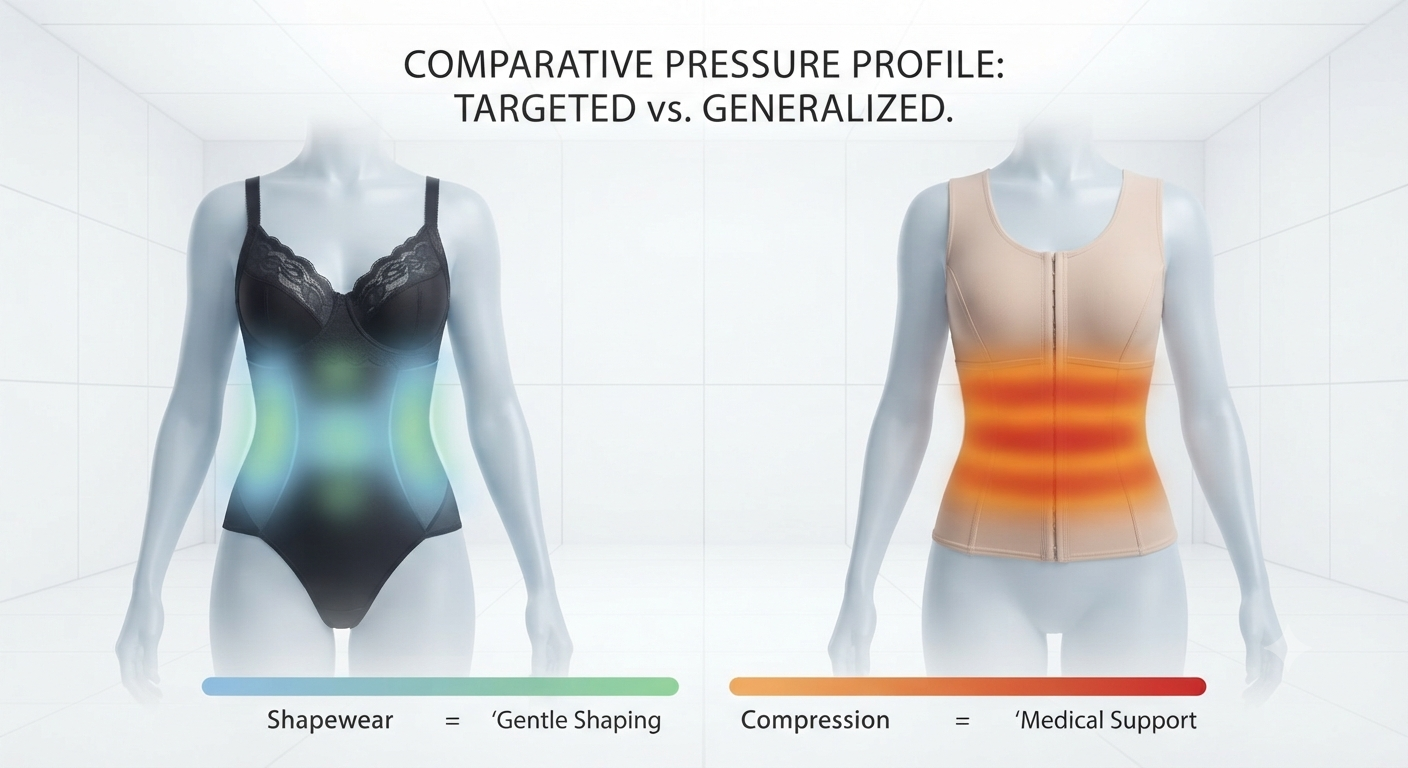
Shapewear usually offers light to medium compression designed for comfortable everyday use.
Compression garments typically provide stronger and more targeted pressure to support muscles and body functions.
For example:
Shapewear is commonly made with:
These materials provide flexibility, softness, and long-lasting elasticity.
Compression garments often use technical fabrics that focus on:
Shapewear customers are mainly:
Compression garment customers include:
The global demand for body shaping and performance apparel continues to grow. Offering both shapewear and compression garments allows retailers to reach a wider customer base.
For fashion retailers, shapewear provides strong opportunities because of:
For sports and wellness retailers, compression garments provide opportunities in:
When selecting products, buyers should consider:
Recommended:
Recommended:
Recommended:

Working with an experienced shapewear supplier helps brands develop competitive products with:
Professional manufacturers can help wholesalers and retailers create product collections that match different markets and customer preferences.
Although shapewear and compression garments share similar appearances, they serve different consumer needs. Shapewear focuses on body shaping, confidence, and fashion enhancement, while compression garments focus on support, performance, and recovery.
For global buyers, understanding these differences helps create better product selections and build stronger apparel collections. With increasing demand for comfortable, functional, and stylish bodywear, both categories offer significant growth opportunities in international markets.

 EN
EN