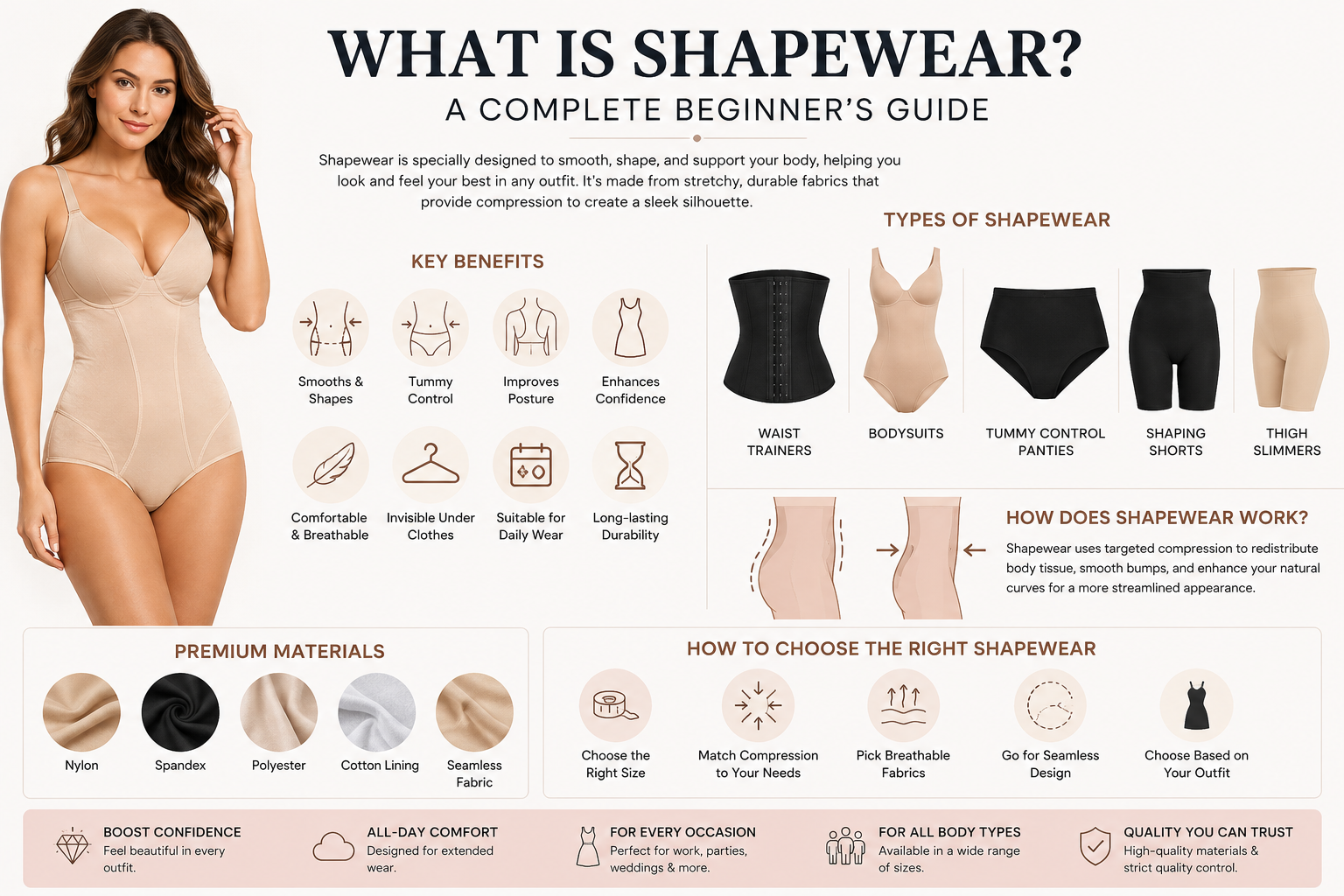
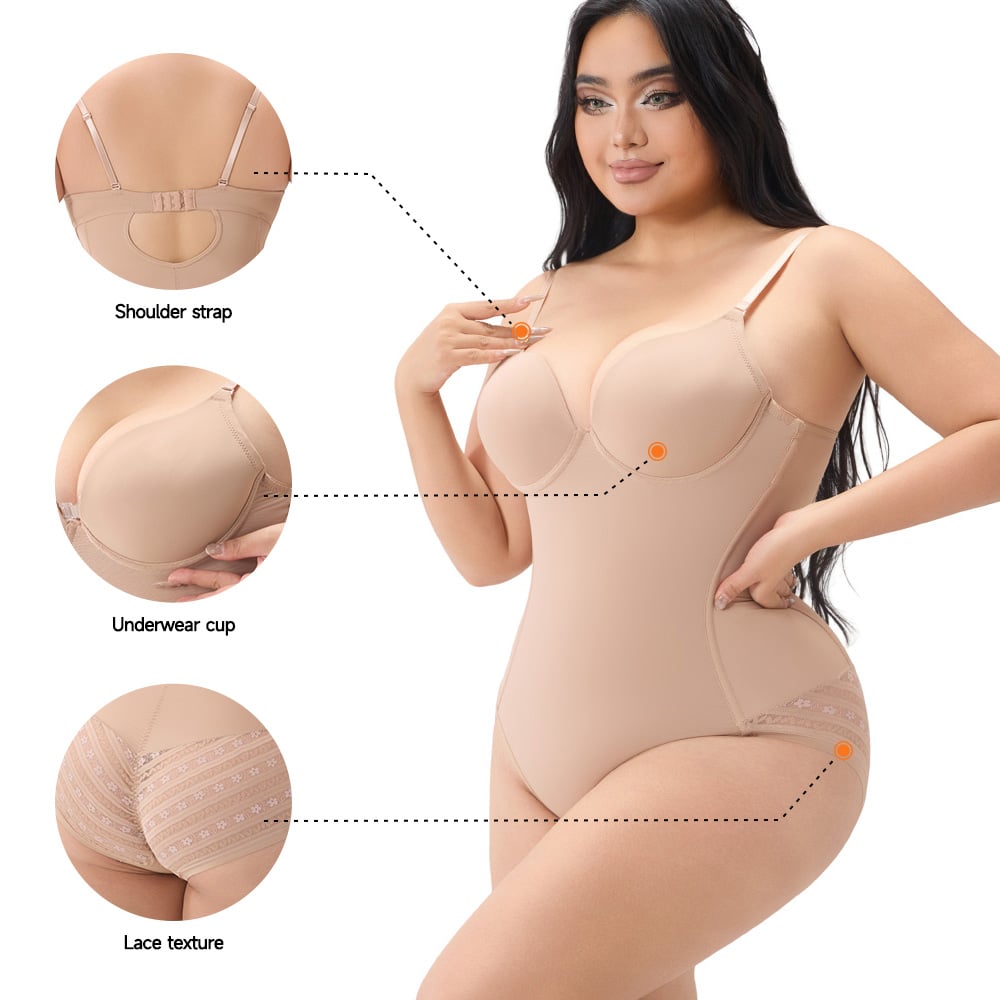
The global shapewear market has experienced significant growth over the past decade, driven by increasing consumer demand for body-enhancing apparel, comfort-focused compression technology, and fashion versatility. For wholesalers, distributors, retailers, and private label brands, understanding the different types of shapewear and selecting the right products is essential to meeting market demand and maximizing profit margins.
This guide provides a comprehensive overview of shapewear from a wholesale buyer's perspective, helping importers and retail businesses make informed purchasing decisions.
Shapewear is a category of compression garments designed to smooth, sculpt, and support the body's natural silhouette. Unlike traditional corsets, modern shapewear combines advanced fabrics with ergonomic construction to provide comfortable shaping for everyday wear.
Common shaping areas include:
Today's shapewear is widely used for daily wear, business attire, weddings, fitness, postpartum recovery, and special occasions.
Waist trainers provide targeted compression around the midsection to create a slimmer waistline. They are among the best-selling categories in North America and Latin America.
Ideal for:
Full-body shapewear smooths multiple body areas simultaneously, including the waist, abdomen, hips, and thighs.
Advantages:
These combine tummy control with thigh smoothing, making them one of the most versatile retail products.
Suitable for:
Compression camisoles offer light shaping while maintaining comfort, making them suitable for everyday wear.
Best for:
Designed specifically for mothers after childbirth, postpartum shapewear provides abdominal support and gentle compression during recovery.
Growing demand has made this category increasingly attractive for wholesalers.
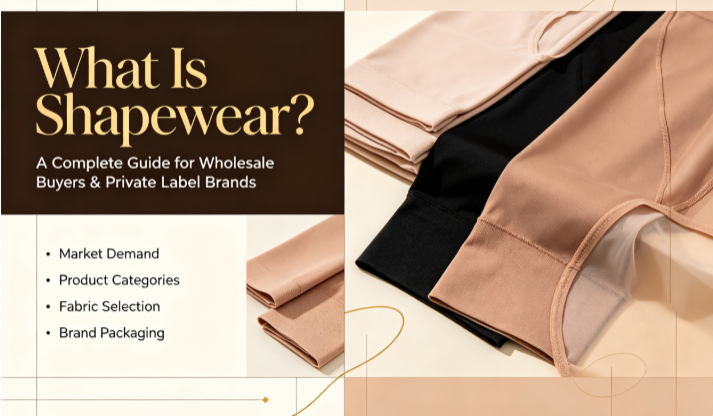
High-quality shapewear relies on premium performance fabrics.
Common materials include:
These materials provide:
Wholesale buyers should understand different compression levels before placing orders.
Suitable for:
Ideal balance between shaping and comfort.
Popular among:
Offers maximum shaping and support.
Recommended for:
When evaluating suppliers, buyers should prioritize products offering:
These features improve customer satisfaction while reducing product returns.
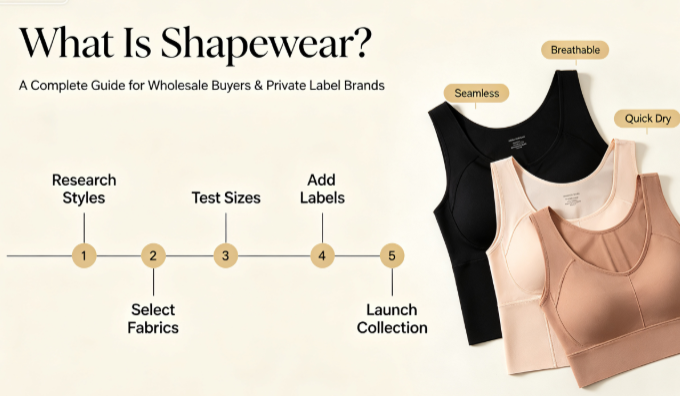
Several factors continue driving worldwide demand:
Consumers seek garments that enhance natural body curves without sacrificing comfort.
Body-hugging dresses and fitted clothing continue to increase shapewear sales.
Influencers, celebrities, and fashion creators regularly promote shaping garments across digital platforms.
Modern compression technology allows consumers to wear shapewear comfortably throughout the day.
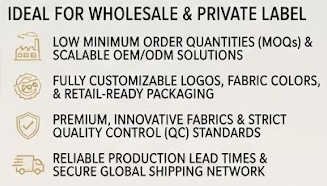
Reliable manufacturing partners should provide:
Long-term cooperation with experienced manufacturers helps wholesalers maintain product consistency and strengthen brand competitiveness.
Before placing a bulk order, buyers should consider:
Careful planning reduces procurement risks and improves inventory management.
Private label shapewear allows retailers and distributors to:
As demand for customized apparel continues to rise, private labeling has become a preferred strategy for many wholesalers worldwide.
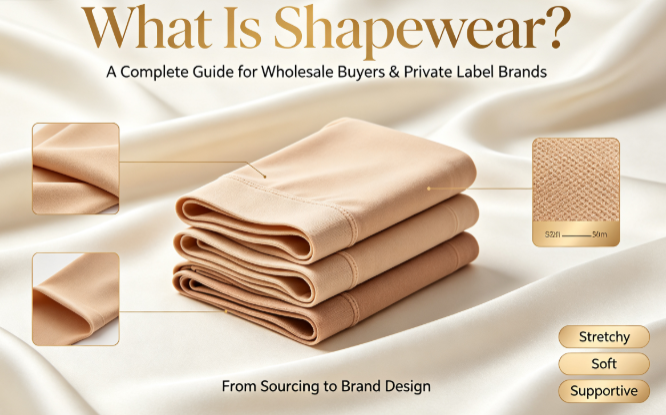
Shapewear has evolved into one of the fastest-growing categories in the global apparel industry. For wholesale buyers, understanding product types, compression levels, materials, and manufacturing capabilities is essential for selecting products that align with market demand.
Whether supplying supermarkets, chain retailers, e-commerce brands, or private label businesses, partnering with an experienced manufacturer and offering high-quality shapewear can create long-term commercial success in an increasingly competitive global market.

 EN
EN