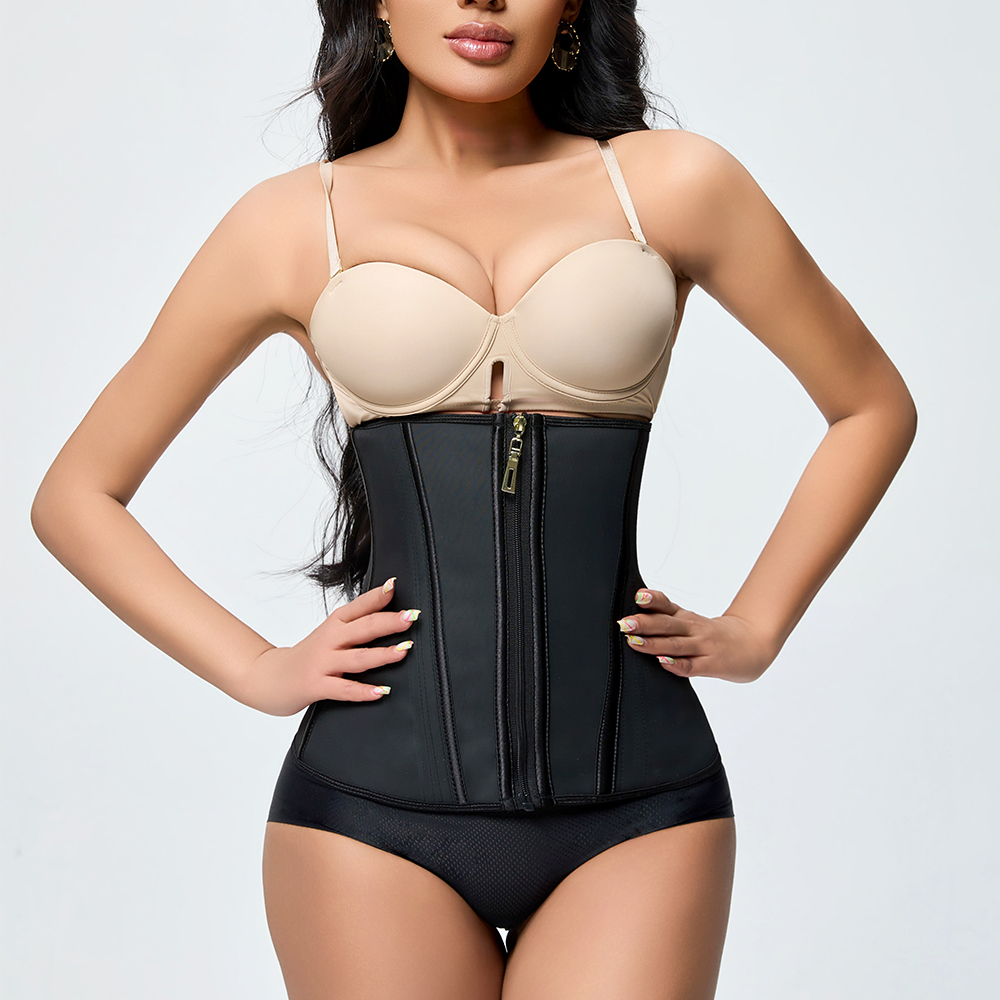
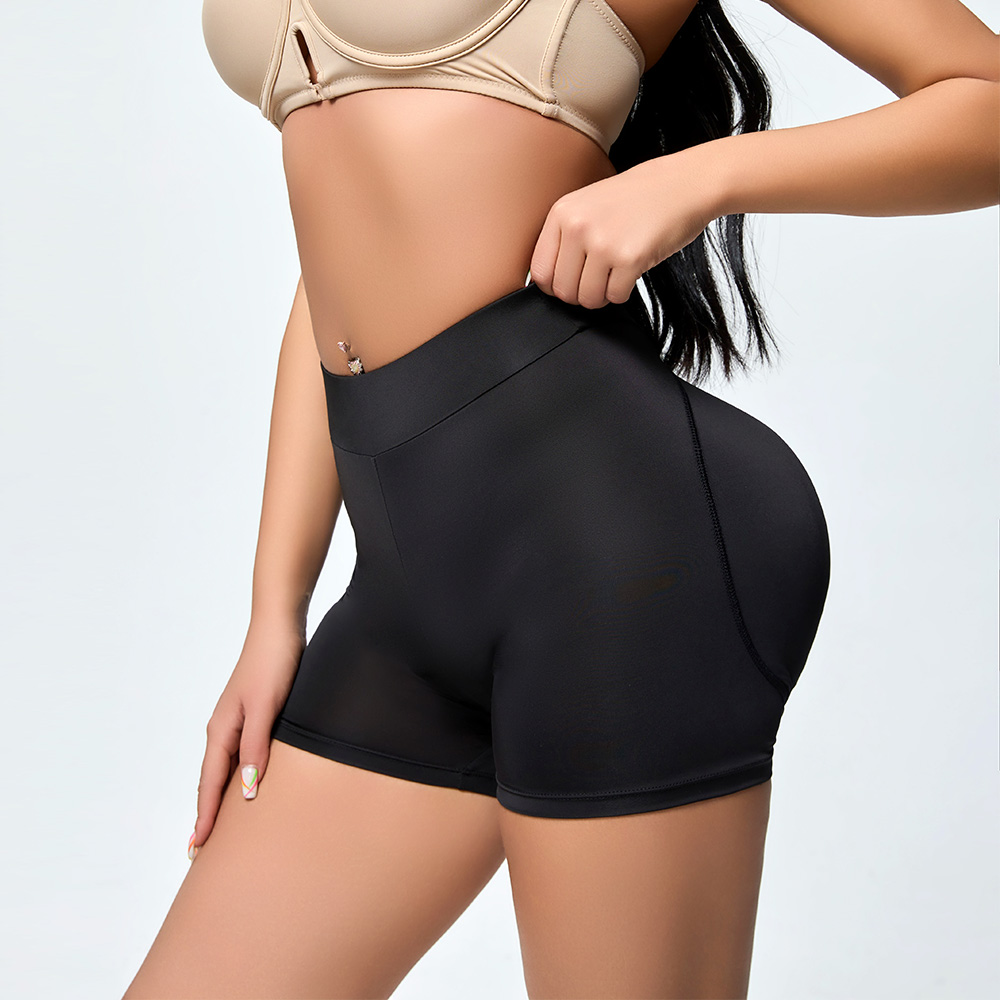
Traditional cut-and-sew methods introduce seams that act as weak points in shapewear shorts—concentrating stress during wear and washing, accelerating tearing, elastic degradation, and loss of compression. Circular knitting bypasses this entirely by producing seamless shorts as continuous tubes. With no side seams, tension distributes uniformly across the garment, preserving fabric integrity through repeated stretching and laundering. This foundational technique delivers three core benefits:
While circular knitting forms the main body, high-stress areas like leg openings and waistbands require secure closure without compromising integrity. Traditional stitching punctures fibers, creating micro-tears that propagate under tension. Hot-melt bonding fuses fabric layers molecularly using thermoplastic adhesives—no needle holes, no fiber damage. Independent testing shows bonded joints retain over 92% of original tensile strength after 50+ washes, outperforming stitched seams by 35% (Textile Performance Journal, 2023). This method is essential for preventing roll-down at leg openings, resisting moisture penetration in high-sweat zones, and sustaining the garment’s intended silhouette far longer than stitched alternatives.
Fabric composition directly governs how long seamless shapewear shorts retain functional compression. Nylon/spandex blends—typically 82% nylon, 18% spandex—are industry-preferred for high-tension applications: nylon delivers exceptional tensile strength and abrasion resistance; spandex contributes rapid, resilient recovery. In controlled durability trials, premium nylon/spandex seamless shorts retained over 85% of original tension after 50+ wash cycles. By contrast, polyester/microfiber alternatives—though lighter and quicker-drying—consistently lost 10–15% more elasticity over the same period due to weaker intermolecular bonding under sustained stretch. For lasting performance, a nylon-dominant blend remains the most empirically validated choice.
Power mesh isn’t just about added firmness—it’s precision load management. Strategically placed diamond-pattern knits in high-stress zones (e.g., waistband, thigh cuffs) redistribute compression forces across a broader surface area, reducing peak strain on individual elastic fibers by up to 30%. This engineered dispersion delays elastic fatigue, enabling hundreds of wear cycles before permanent deformation occurs. When integrated into seamless circular-knit construction, power mesh eliminates the stitch-line stress concentrations that typically initiate failure in conventional shapewear—preserving both functional support and the smooth, invisible silhouette wearers rely on.
Three evidence-based care practices significantly extend the functional lifespan of seamless shapewear shorts by protecting their engineered components. Washing in cold water (below 30°C/86°F) prevents thermal breakdown of elastane, preserving up to 92% compression retention after 50 washes—versus just 74% with hot water (Textile Performance Journal, 2023). Flat drying avoids gravitational distortion, safeguarding the structural fidelity of circular-knit architecture. Most critically, omitting fabric softeners prevents chemical residue from coating fibers and degrading hot-melt bond zones—residue reduces inter-yarn friction needed for elastic rebound. Wearers who follow this regimen see 15% higher elasticity retention after six months of regular use. Together, these steps directly mitigate the three primary failure modes in seamless shapewear: elastic fatigue, bond separation, and fiber degradation.
A: Circular knitting is a method that produces garments as continuous tubes without side seams, distributing tension evenly, preventing friction, chafing, and promoting garment durability.
A: Hot-melt bonding uses thermoplastic adhesives to secure fabric layers, retaining over 92% tensile strength after 50+ washes, outperforming traditional stitching by 35%.
A: Nylon/spandex blends are preferred due to high tensile strength and elasticity retention over 50+ wash cycles, outperforming polyester/microfiber blends.
A: Power mesh optimizes load distribution to delay elastic fatigue, ensuring compression zones retain their structure through extended wear cycles.
A: Wash in cold water, flat dry, and avoid fabric softeners to preserve elastic integrity, bond strength, and fabric recovery for longer-lasting performance.

 EN
EN