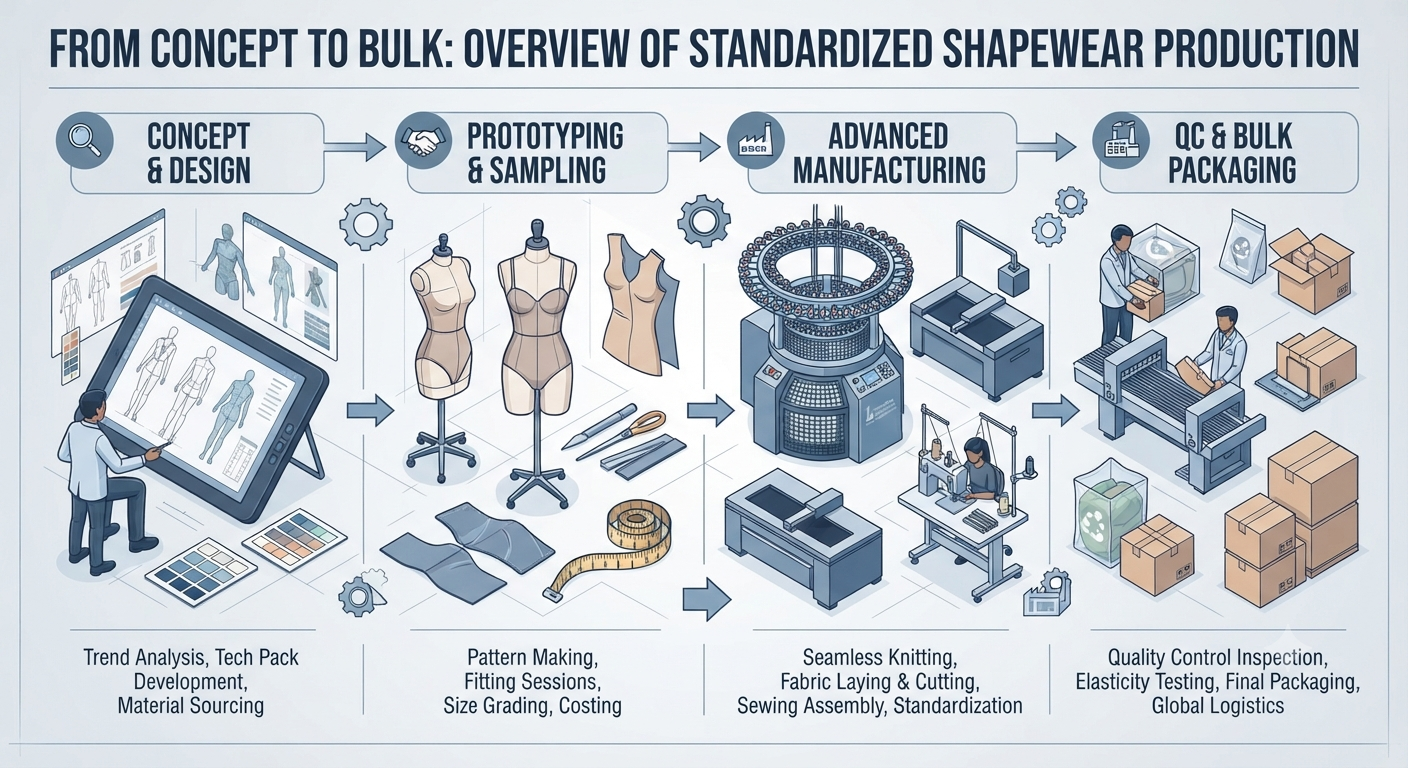
When sourcing high-quality shapewear, breathability has become one of the most important factors influencing consumer satisfaction and repeat purchases. Modern customers expect shapewear to provide effective body shaping while maintaining comfort during long-term wear.
For wholesalers, retailers, and private label brands, evaluating fabric breathability before bulk purchasing is essential. A breathable shapewear product can reduce discomfort, improve wearing experience, and increase market competitiveness.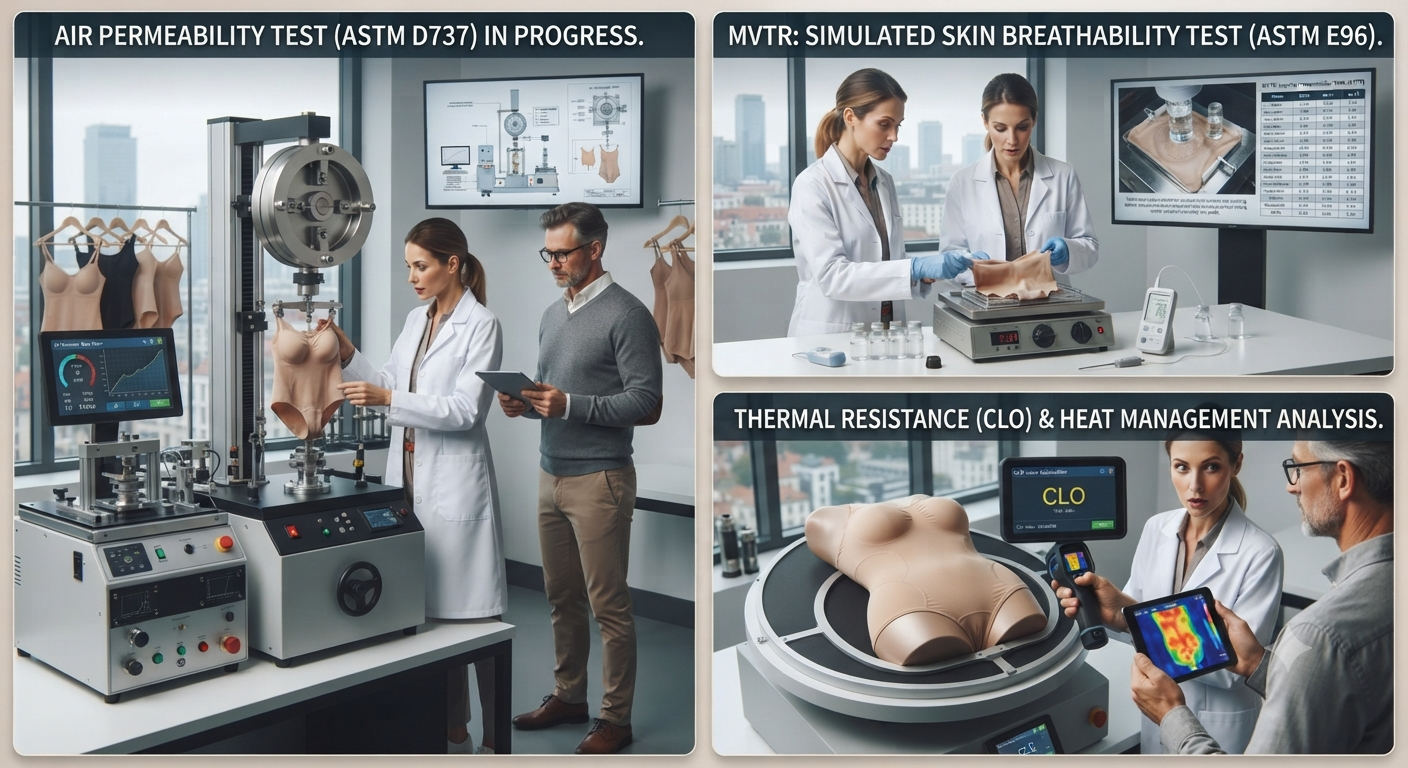
Air permeability measures how easily air can pass through shapewear fabric. It is one of the most common indicators used to evaluate ventilation performance.
During testing, manufacturers measure the volume of air passing through a specific fabric area under controlled pressure conditions. Higher air permeability usually indicates better ventilation and improved comfort.
For procurement teams, comparing air permeability data between suppliers helps identify fabrics suitable for different climates and target markets.
Sweat control is another critical factor for shapewear comfort. High-performance shapewear fabrics should quickly absorb moisture from the skin and transfer it to the outer surface for evaporation.
Key indicators include:
These metrics are especially important for markets with warm climates, such as Southeast Asia, South America, and the Middle East.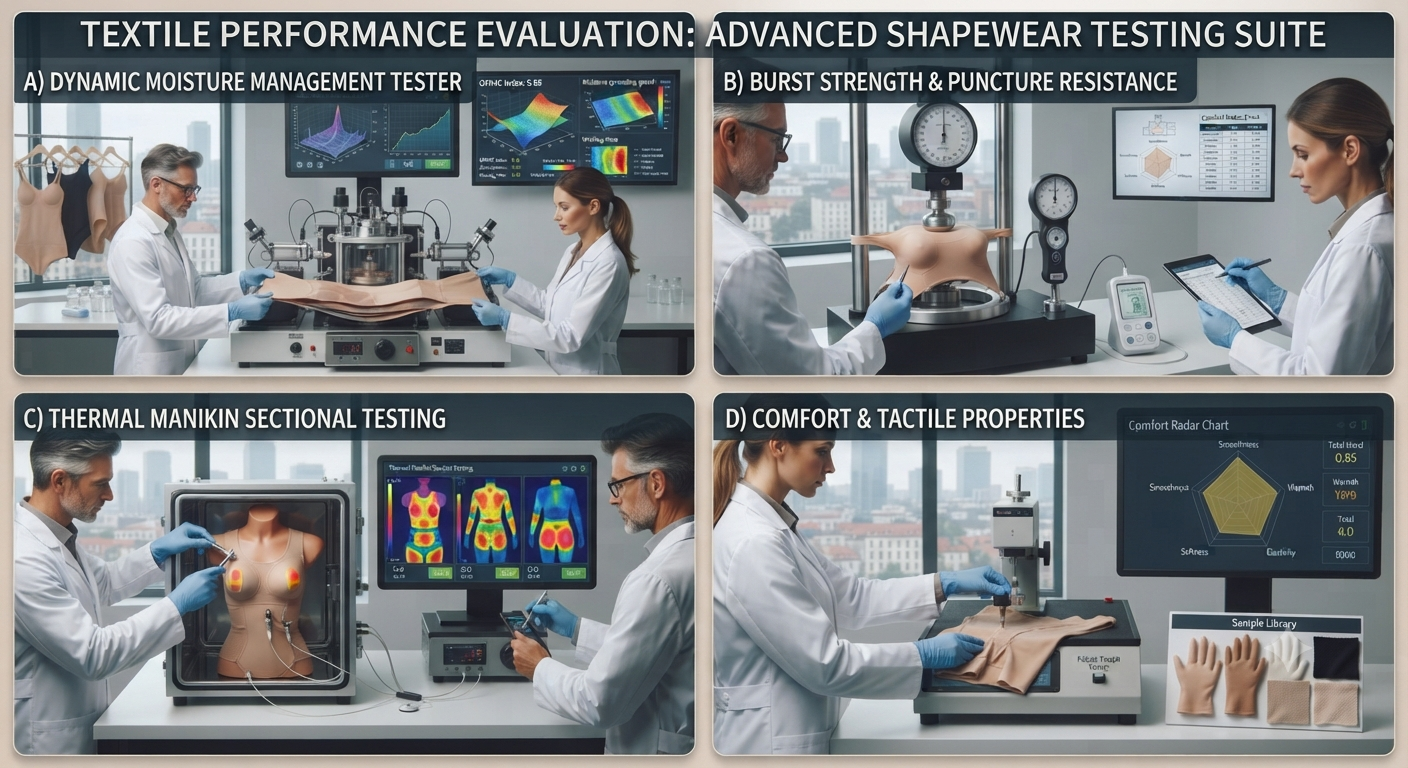
The construction of shapewear fabric directly affects airflow and comfort.
Common breathable technologies include:
During supplier evaluation, buyers should check whether breathable zones are strategically designed without affecting shaping performance.
Breathability is closely related to heat regulation. Professional manufacturers evaluate whether shapewear allows heat to escape during extended wear.
Important measurements include:
These tests help brands develop shapewear suitable for daily wear, fitness, and summer collections.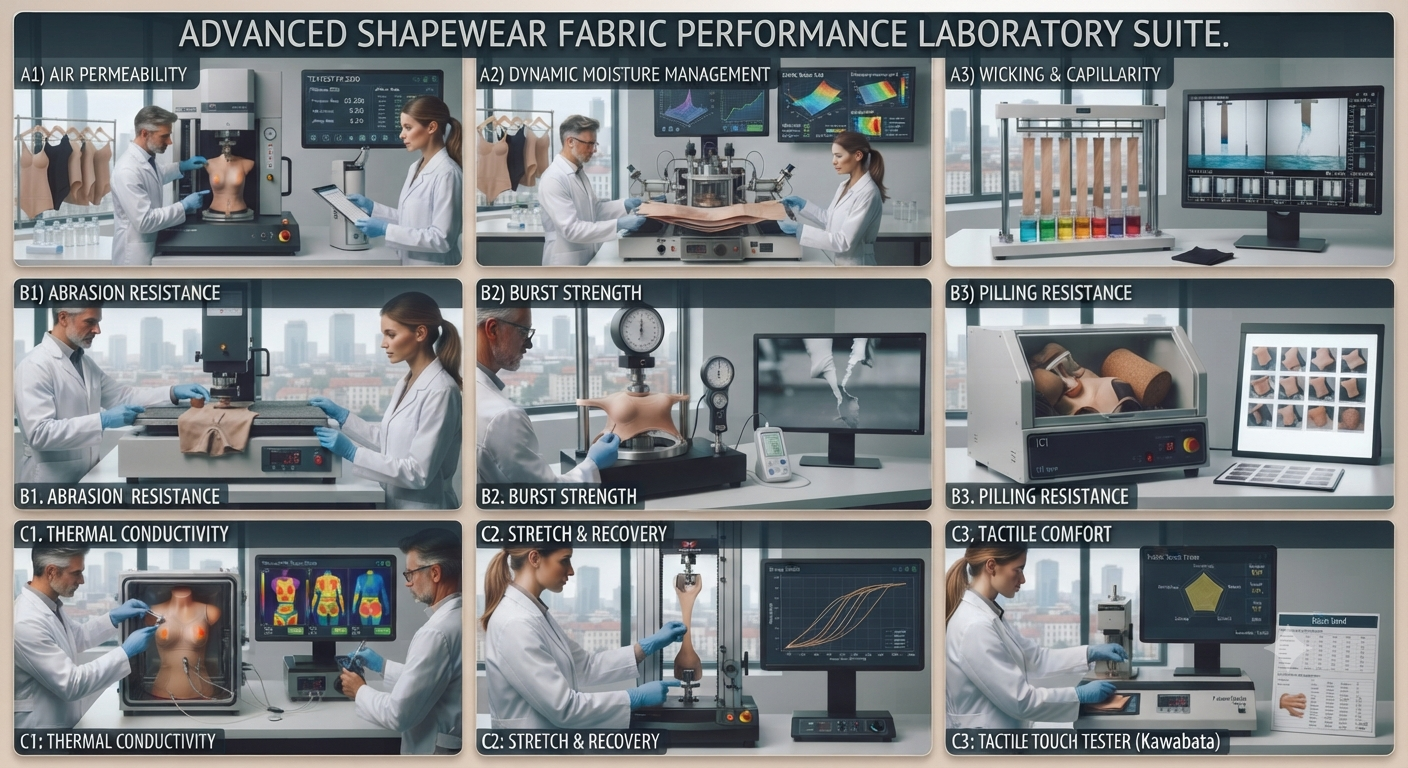
Laboratory data is important, but real wearing tests provide additional insights.
Procurement teams should evaluate:
Combining laboratory testing with user feedback helps ensure better product quality before mass production.
For global shapewear buyers, breathability is no longer an optional feature. It directly impacts customer reviews, return rates, and brand reputation.
Choosing a supplier with professional fabric testing capabilities allows retailers to offer shapewear products that combine:
By understanding key breathability metrics, buyers can make more informed sourcing decisions and build stronger product lines in the competitive shapewear market.

 EN
EN