In today’s global apparel market, understanding seasonal demand is essential for success in the shapewear industry. Unlike basic clothing categories, shapewear sales are highly influenced by lifestyle changes, weather conditions, cultural events, and regional shopping behaviors.
From North America to Southeast Asia, buyers are adjusting their sourcing strategies based on seasonal trends to maximize turnover and reduce inventory risks. For distributors, wholesalers, and private label brands, recognizing these patterns is no longer optional—it is a key factor in staying competitive and increasing profit margins.
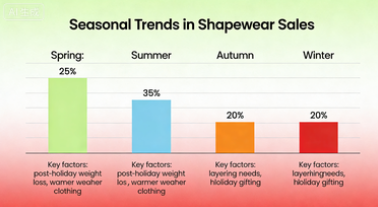
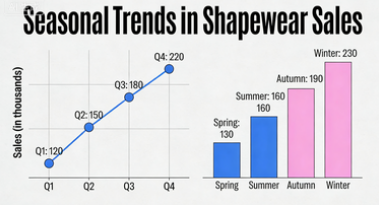
Spring marks the transition from low to rising demand in most Western markets.
As consumers move away from heavy winter clothing, they begin preparing for lighter outfits. This shift naturally increases interest in body shaping products, especially those that offer comfort and flexibility.
In addition, the “fitness and body reset” trend during spring encourages more consumers to purchase shapewear as part of their lifestyle improvement.
Buyer Insight:
▪️ Start increasing inventory gradually
▪️ Focus on lightweight and breathable shapewear
▪️ Promote everyday shaping essentials

Summer is the strongest sales period for shapewear globally.
With the rise of dresses, fitted clothing, and social events such as weddings, vacations, and parties, consumers are more likely to purchase shapewear for immediate use. Demand for seamless and invisible products significantly increases during this time.
In hot climates, breathable and moisture-wicking fabrics become critical selling points.
Buyer Strategy:
▪️ Increase stock levels by 30–50%
▪️ Focus on seamless, lightweight, and high-stretch products
▪️ Prioritize fast-moving SKUs
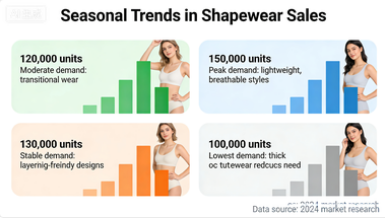
Autumn brings a more stable demand pattern, but it remains an important season for strategic planning.
As consumers return to work routines, shapewear becomes more focused on daily wear rather than occasional use. Products with moderate compression and comfort features perform well during this period.
This is also an ideal time for distributors to introduce new collections and test market response.
Opportunities for Buyers:
▪️ Launch new product lines
▪️ Offer bundle deals for retailers
▪️ Optimize inventory structure
Winter typically sees a slight decline in volume, but certain categories perform strongly.
Holiday seasons such as Christmas and New Year create opportunities for gift-oriented shapewear products. Additionally, postpartum shapewear and high-compression garments remain in demand.
In regions like the Middle East and parts of Latin America, seasonal fluctuations are less pronounced due to climate differences.
Buyer Strategy:
▪️ Focus on premium and gift-ready packaging
▪️ Promote functional shapewear (support + warmth)
▪️ Avoid overstocking slow-moving items
Seasonality varies significantly across global markets.
North America & Europe: Strong seasonal fluctuations, peak in summer
Latin America: Consistent demand year-round due to cultural preferences
Middle East: Demand driven more by fashion style than weather
Southeast Asia: Stable demand with emphasis on lightweight products
Understanding these differences allows buyers to localize their product strategy and avoid a one-size-fits-all approach.
To fully leverage seasonal trends, B2B buyers should adopt the following strategies:
Inventory Planning
Align stock levels with seasonal demand cycles to reduce risks
Product Diversification
Offer different compression levels and fabric types across seasons
Regional Customization
Adapt product selection based on local climate and culture
Marketing Timing
Launch campaigns 1–2 months before peak seasons
Seasonal trends play a crucial role in shaping the global shapewear market. For wholesalers, distributors, and private label brands, understanding these patterns is essential for making informed purchasing decisions and maximizing profitability.
By aligning product strategy, inventory planning, and market timing with seasonal demand, businesses can gain a strong competitive advantage in both established and emerging markets.






 EN
EN