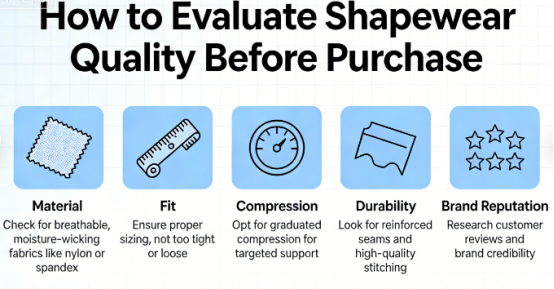
In the competitive shapewear market, product quality is one of the most critical factors influencing customer satisfaction, return rates, and long-term brand reputation. For distributors, wholesalers, and private label buyers, evaluating shapewear quality before placing bulk orders is essential to avoid costly mistakes.
Unlike standard apparel, shapewear requires a precise balance between compression, comfort, durability, and fit. Poor quality products can lead to high return rates, negative reviews, and lost business opportunities. Therefore, having a clear quality evaluation framework is crucial for every buyer.
The fabric used in shapewear directly determines its performance, comfort, and durability.
High-quality shapewear typically uses a blend of nylon and spandex, offering both elasticity and strength. The fabric should feel smooth, breathable, and supportive without being overly stiff or thin.
Low-quality materials often lose elasticity after a few washes, leading to poor shaping results and customer dissatisfaction.
Buyer Insight:
▪️ Check fabric composition (recommended: high spandex ratio)
▪️ Test stretch recovery performance
▪️ Ensure breathable and skin-friendly texture
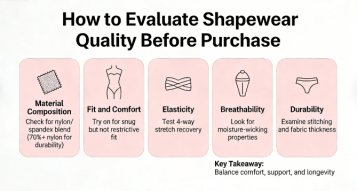
Compression is the core function of shapewear, but it must be carefully balanced.
Too much compression can cause discomfort and limit movement, while too little compression reduces shaping effectiveness. High-quality shapewear offers targeted compression zones, focusing on areas like the waist, abdomen, and thighs.
Buyer Strategy:
▪️ Request samples with different compression levels
▪️ Test wearability for extended periods
▪️ Evaluate shaping effect vs comfort
Stitching quality is a key indicator of overall product durability.
Well-made shapewear features tight, even stitching, reinforced seams, and no loose threads. Weak stitching can lead to tearing, especially in high-stress areas.
Seamless or flatlock stitching is preferred for premium products, as it enhances comfort and invisibility under clothing.
Checklist for Buyers:
▪️ Inspect seams and stitching density
▪️ Check for loose threads or weak joints
▪️ Test stretching at seam areas
Sizing inconsistency is one of the biggest causes of returns in the shapewear industry.
A high-quality supplier should provide accurate size charts based on target markets (US, EU, Asia). The product should offer a snug fit without rolling down or cutting into the skin.
Buyer Insight:
▪️ Compare size charts with local market standards
▪️ Conduct fit testing on different body types
▪️ Ensure consistent sizing across batches
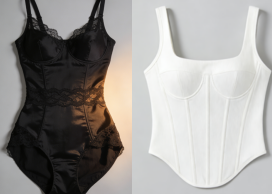
Small design elements can significantly impact product performance.
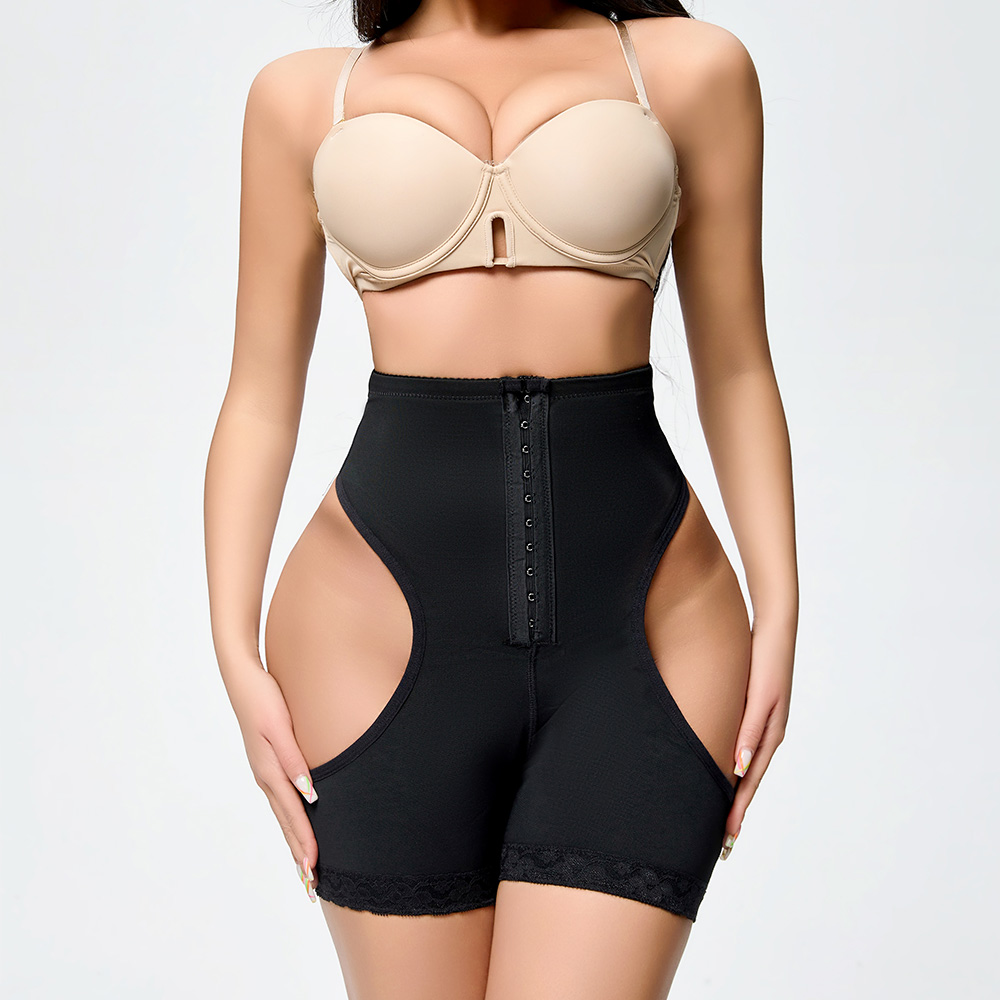
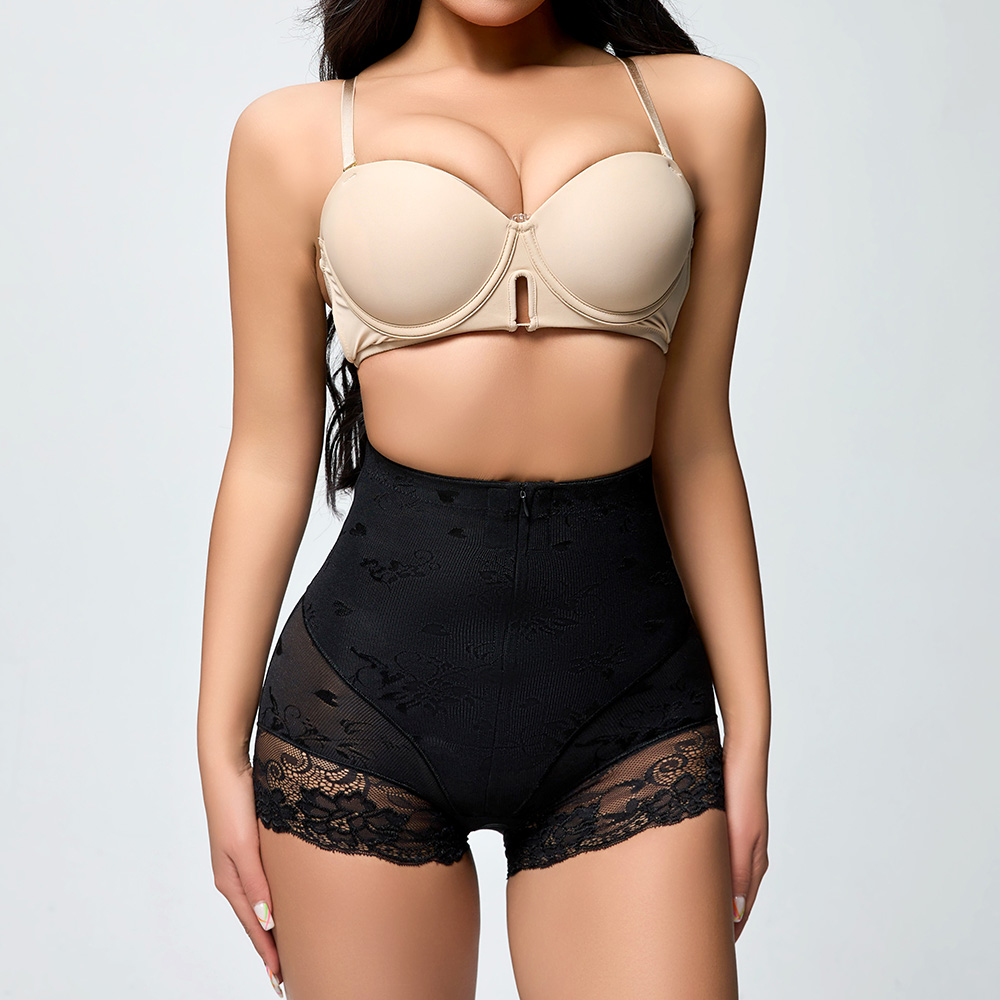
Features such as non-slip waistbands, lace hems, breathable panels, and hook closures enhance both functionality and user experience.
These details also help differentiate products in competitive retail environments.
Key Features to Evaluate:
▪️ Anti-roll waistband design
▪️ Leg opening comfort (no digging or rolling)
▪️ Breathability in high-sweat areas
One of the most overlooked factors is how well the shapewear maintains its shape over time.
High-quality shapewear should return to its original form after repeated stretching and washing. Poor elasticity leads to sagging and reduced shaping performance.
Buyer Strategy:
▪️ Perform stretch and recovery tests
▪️ Wash test samples multiple times
▪️ Evaluate long-term durability
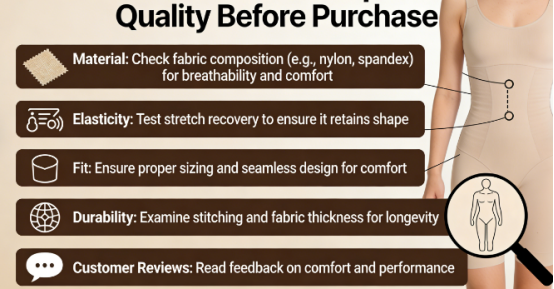
Evaluating shapewear quality before purchase is not just about checking materials—it requires a comprehensive assessment of fabric, compression, construction, fit, and supplier reliability.
For wholesalers, distributors, and private label brands, investing time in quality evaluation can significantly reduce risks, improve customer satisfaction, and build a stronger brand reputation in competitive markets.

 EN
EN