Introduction
Understanding the pricing structure of silicone butt pads is essential for wholesalers, distributors, and private label brands looking to enter or expand in this fast-growing body-shaping product category. Prices in this market are not random—they are determined by a combination of materials, production processes, customization level, and logistics factors.
This guide breaks down the key elements that influence cost, helping you make more informed sourcing decisions and improve your profit margins.
The foundation of pricing is the type of silicone used.
Higher-quality silicone significantly increases production cost but also improves product positioning and retail price potential.
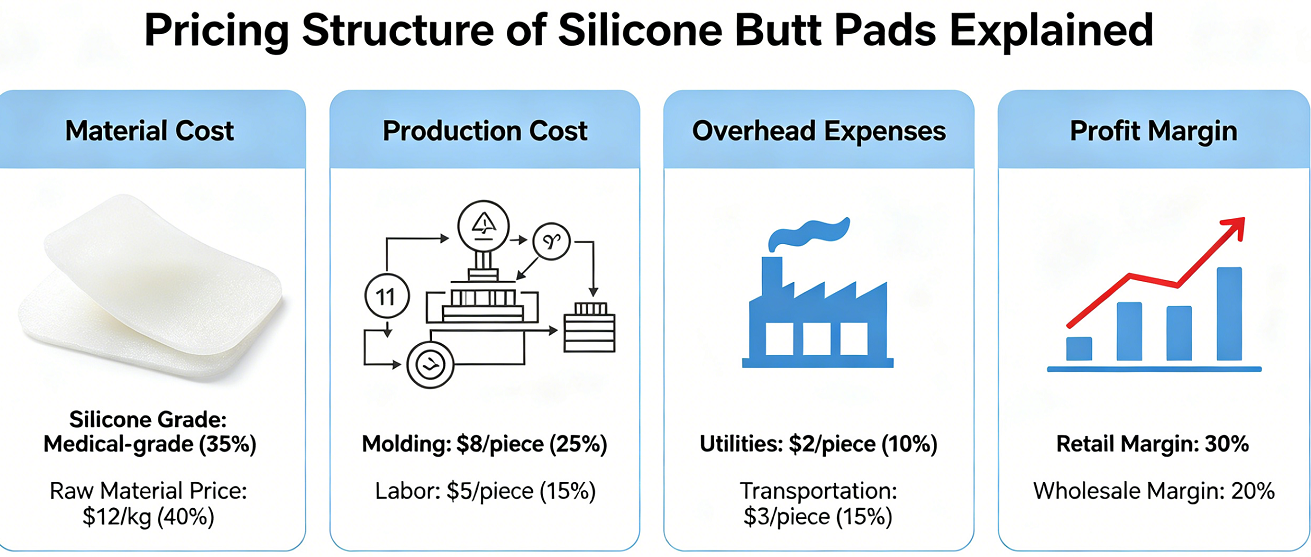
The structure and shape of the butt pads directly affect manufacturing cost:
More complex molds require additional development time and higher production precision, which increases unit price.
Silicone products are often priced based on material usage.
For bulk buyers, even small changes in weight can significantly affect overall procurement cost.
Different production methods also impact pricing:
Premium products usually involve more manual finishing to achieve realistic textures and seamless edges.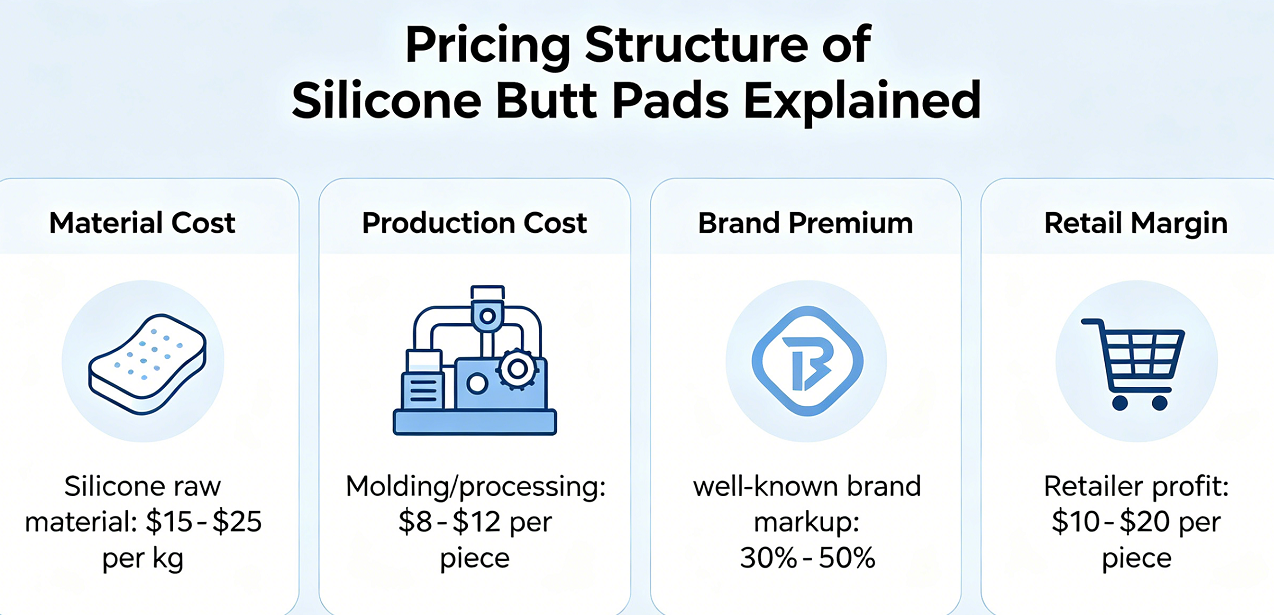
Customization is one of the biggest cost drivers.
For private label brands, customization is an investment in long-term brand value
Packaging can significantly influence total cost, especially for retail-ready products:
Strong packaging often increases perceived value, allowing higher retail pricing.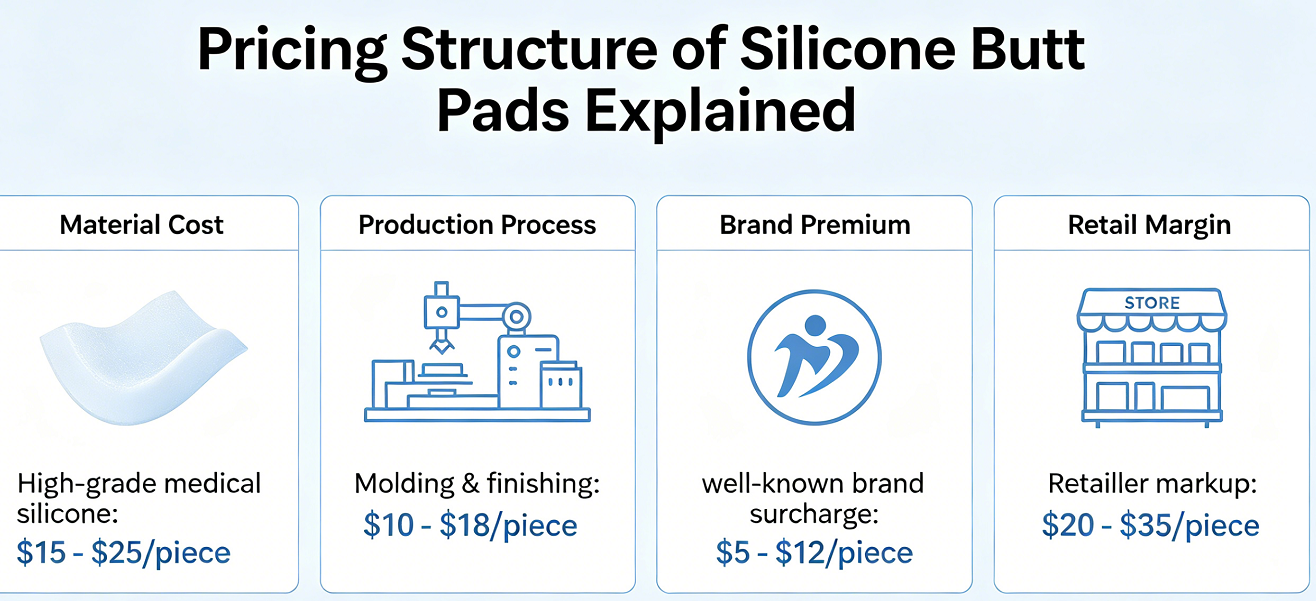
The pricing structure of silicone butt pads is shaped by multiple factors including material quality, design complexity, customization level, and logistics. For B2B buyers, understanding these cost drivers is essential for building a profitable product line and selecting the right supplier.
By optimizing order volume, customization strategy, and packaging choices, wholesalers and brands can significantly improve margins while maintaining product quality and competitiveness in global markets.

 EN
EN